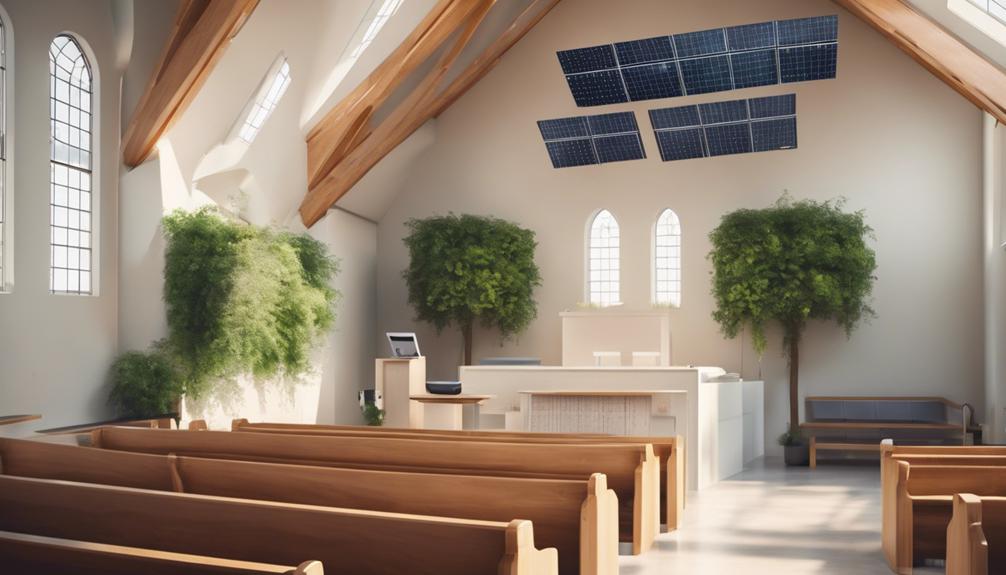
By adopting eco-friendly tech solutions, you can reduce your church's carbon footprint and operational costs by up to 30%. Start by upgrading to energy-efficient lighting systems, which use up to 90% less energy and last longer. Implement sustainable communication strategies like digital newsletters and virtual meeting tools to reduce paper waste and travel. You can also optimize your facility's energy consumption with building automation systems and renewable energy harvesting. Take the next step in making your church operations more sustainable – you'll discover more ways to make a positive impact on the environment.
Energy-Efficient Lighting Systems
By switching to energy-efficient lighting systems, you can greatly reduce your church's energy consumption and lower its environmental footprint. Not only will this decision benefit the planet, but it will also lead to substantial cost savings for your church. Energy-efficient lighting systems use substantially less energy than traditional lighting options, which means you'll see a noticeable decrease in your energy bills.
One option to ponder is LED lighting, which uses up to 90% less energy than traditional incandescent bulbs. Additionally, LED bulbs have a much longer lifespan, reducing the need for frequent replacements. This not only reduces waste but also saves you time and resources.
When making the shift, contemplate retrofitting your existing lighting fixtures with energy-efficient options. This can be a cost-effective way to make a big impact. You can also think about upgrading to smart lighting systems, which allow you to control lighting levels and schedules remotely. This can be especially useful for churches with varied schedules and events.
Sustainable Communication Strategies
As you explore sustainable communication strategies for your church operations, you'll find that adopting eco-friendly tech solutions can markedly reduce your environmental footprint. You can start by switching to digital newsletter platforms, which eliminate the need for paper and ink. By leveraging virtual meeting tools and green messaging apps, you'll not only reduce waste but also streamline your communication processes.
Digital Newsletter Platforms
In addition to reducing your church's environmental footprint and saving resources, switching from traditional print newsletters to digital platforms offers customizable templates, user-friendly interfaces, and seamless email integration. This change not only helps the environment but also saves your church time and money on printing and mailing costs. With digital newsletters, you can easily track engagement metrics, such as open rates and click-through rates, to refine your communication strategy. You can also personalize content for different segments of your congregation, ensuring that everyone receives relevant information. Additionally, digital newsletters enable you to share multimedia content, such as videos and podcasts, to engage your audience in new ways. By adopting digital newsletter platforms, you'll be able to focus on what matters most – serving your community and spreading the message of love and compassion.
Virtual Meeting Tools
With virtual meeting tools, your church can reduce its carbon footprint and minimize logistical hassles while still facilitating effective communication and collaboration among members. By switching to virtual meetings, you'll reduce the need for travel, saving time, money, and emissions. You'll also reduce the demand on physical meeting spaces, which can help reduce energy consumption and waste.
Virtual meeting tools offer a range of features that make remote collaboration seamless. You can host video conferences, share files, and collaborate on documents in real-time. You can also record meetings for future reference, ensuring that everyone stays on the same page. Plus, many virtual meeting tools offer integrations with other eco-friendly tech solutions, such as digital newsletter platforms, to streamline your church's operations.
Green Messaging Apps
Green messaging apps streamline your church's communication by providing eco-friendly alternatives to traditional SMS and email, allowing you to stay connected with your congregation while reducing digital waste. You can choose from a variety of apps that offer environmentally friendly features, such as end-to-end encryption, minimal data storage, and energy-efficient design. By switching to a green messaging app, you'll not only reduce your church's carbon footprint but also promote a culture of sustainability within your community.
As you explore different green messaging apps, look for features that align with your church's values and communication needs. Consider apps that offer group chats, file sharing, and customizable notifications. Some popular options include Signal, Telegram, and Threema. These apps prioritize user privacy, minimize data collection, and reduce e-waste. By adopting a green messaging app, you'll demonstrate your church's commitment to serving others while protecting the planet. Make the switch today and inspire your congregation to join the eco-friendly movement!
Eco-Friendly Printing Solutions
Church administrators can greatly decrease their environmental footprint by adopting eco-friendly printing solutions that minimize waste and conserve resources. You're probably wondering how to make a positive impact on the environment while still meeting your printing needs. The good news is that you don't have to sacrifice quality or convenience to go green.
Start by switching to energy-efficient printers that use eco-friendly ink cartridges. These printers consume less energy and produce fewer emissions, reducing your carbon footprint. You can also explore digital printing options, such as printing on recycled paper or using reusable printing materials. This not only reduces waste but also helps conserve natural resources.
Another way to reduce your environmental impact is to reduce paper usage. Consider digitizing your documents, newsletters, and bulletins. You can send electronic versions to your congregation, reducing the need for physical copies. You can also use double-sided printing and print only what's necessary, minimizing unnecessary waste.
Waste Reduction and Recycling
As you work to make your church's operations more sustainable, you'll want to tackle the issue of waste reduction and recycling. You can start by implementing strategies to reduce paper waste, such as digitizing documents and using reusable products. By properly disposing of electronic waste and recycling old equipment, you'll be doing your part to minimize your church's environmental footprint.
Reducing Paper Waste
How many reams of paper do you estimate your church goes through in a year, and what impact could reducing that waste have on the environment? The answer might surprise you. According to the Environmental Protection Agency, the average American uses about 700 pounds of paper per year. Now, imagine the collective impact of your congregation's paper usage. By evaluating paper waste, your church can greatly minimize its ecological footprint.
Start by evaluating your church's current paper usage. Identify areas where you can switch to digital alternatives. For instance, consider using digital bulletins, newsletters, and announcements instead of printing them. You can also encourage members to receive digital updates via email or mobile apps. Additionally, implement a recycling program for paper waste, and educate your congregation on the importance of responsible paper usage.
Proper E-Waste Disposal
You'll be surprised at the staggering amount of electronic waste your church generates, from outdated computers and phones to broken printers and copiers, all of which require responsible disposal to prevent toxic chemicals from seeping into landfills. Inadequate disposal can contaminate soil and groundwater, posing serious environmental and health risks. To guarantee your church is doing its part, establish a protocol for responsible e-waste disposal.
Here are some guidelines to follow:
| Device | Disposal Method | Why |
|---|---|---|
| Computers, laptops | Donate or recycle through certified facilities | Prevents toxic chemicals from landfills |
| Phones, tablets | Recycle through manufacturer take-back programs | Conserves natural resources |
| Printers, copiers | Donate or recycle through certified facilities | Reduces landfill waste |
| Batteries | Recycle through designated facilities | Prevents toxic chemical leakage |
Recycling Old Equipment
Every year, your church can divert a significant amount of waste from landfills by recycling old equipment, which not only reduces waste but also conserves natural resources. By recycling old equipment, you're not only helping the environment, but you're also setting a great example for your congregation. You can start by identifying old or broken equipment that can be refurbished or recycled. Make sure to erase any sensitive data from devices before recycling them.
You can partner with local electronics recycling facilities that guarantee responsible recycling practices. Some manufacturers also offer take-back programs or trade-in options for old equipment. Additionally, consider donating still-functional equipment to local non-profits or schools. This not only reduces waste but also benefits the community. By recycling old equipment, you're serving the environment and the community, aligning with your church's values of compassion and stewardship. By taking these simple steps, you can make a significant impact and inspire others to follow your lead.
Green Facility Management Tools
Implementing green facility management tools is important for churches to reduce their environmental footprint and save on operational costs, and one effective way to do so is by leveraging energy-efficient lighting systems. By switching to LED or smart lighting, you can greatly reduce energy consumption and lower your energy bills. Additionally, these lighting systems are designed to last longer, reducing maintenance costs and waste.
Another vital aspect of green facility management is optimizing your HVAC system. You can install smart thermostats that learn your schedule and preferences to regulate the temperature, ensuring a comfortable environment while minimizing energy waste. Additionally, consider implementing a building automation system that integrates with your HVAC, lighting, and security systems to optimize energy usage and identify areas of improvement.
You can also reduce water consumption by installing low-flow fixtures and greywater reuse systems. These initiatives not only benefit the environment but also help reduce your utility bills, freeing up more resources for your church's mission and outreach programs. By adopting these green facility management tools, you'll be serving not only your congregation but also the planet, setting a positive example for your community to follow.
Renewable Energy Harvesting Systems
By investing in renewable energy harvesting systems, you can greatly reduce your church's reliance on non-renewable energy sources and lower your carbon footprint. This not only benefits the environment, but it can also lead to significant cost savings in the long run. Renewable energy harvesting systems use natural resources like sunlight, wind, and water to generate electricity, making them a clean and sustainable option.
Here are some examples of renewable energy harvesting systems you can consider:
| System | How it Works | Benefits |
|---|---|---|
| Solar Panels | Convert sunlight into electricity | Zero emissions, low maintenance |
| Wind Turbines | Convert wind energy into electricity | Abundant resource, low operating costs |
| Hydroelectric Systems | Convert water energy into electricity | Reliable, renewable energy source |
Environmentally Conscious IT Practices
As you shift to more eco-friendly church operations, adopting environmentally conscious IT practices can greatly decrease electronic waste and energy consumption. This not only benefits the environment but also reduces your church's carbon footprint and saves you money on energy bills.
You can start by evaluating your current IT infrastructure and identifying areas for improvement. Consider upgrading to energy-efficient devices, such as LED monitors and low-power computers. Additionally, implement a 'turn off when not in use' policy for all devices to minimize standby power consumption.
Another important aspect is responsible electronics disposal. Make sure that your church responsibly recycles or donates old devices, reducing the amount of e-waste that ends up in landfills. You can partner with organizations that specialize in electronics recycling or refurbishment.
Furthermore, consider virtualizing your servers and data storage to reduce the need for physical hardware. This will not only reduce energy consumption but also minimize the risk of data breaches. By adopting these environmentally conscious IT practices, you can create a more sustainable church operation that benefits both your community and the environment.
Energy Monitoring and Analytics
You can gain valuable insights into your church's energy consumption by tracking and analyzing energy usage patterns through energy monitoring and analytics. By doing so, you'll be able to identify areas of inefficiency, optimize energy usage, and reduce your church's carbon footprint. This not only benefits the environment but also helps you allocate resources more efficiently.
Energy monitoring and analytics can be achieved through various means, including:
- Smart meters and sensors: Install devices that track energy consumption in real-time, providing granular data on energy usage patterns.
- Energy management software: Utilize software that analyzes energy consumption data, providing actionable insights and recommendations for optimization.
- Energy audits: Conduct regular energy audits to identify areas of inefficiency and opportunities for improvement.
- Real-time monitoring dashboards: Implement dashboards that display real-time energy consumption data, enabling you to make data-driven decisions.
Frequently Asked Questions
How Do Eco-Friendly Tech Solutions Impact Church Budgets?
When you invest in eco-friendly tech solutions, you might worry about the financial impact on your church's budget. But here's the good news: many of these solutions can actually save you money in the long run. For instance, energy-efficient lighting and HVAC systems can lower your utility bills. You'll also reduce waste and minimize the need for frequent replacements. By going green, you'll not only serve the planet but also stretch your budget further.
Are Environmentally Friendly Tech Solutions Compatible With Old Systems?
You're wondering if environmentally friendly tech solutions can coexist with your current systems. The good news is that many eco-friendly solutions are designed to be backward compatible, allowing you to integrate them with your existing infrastructure. You'll be pleased to know that upgrading to energy-efficient solutions won't require a complete overhaul of your systems. In fact, many solutions can be seamlessly integrated, ensuring a smooth shift to a more sustainable future.
Can Eco-Friendly Tech Solutions Be Implemented in Historic Church Buildings?
You’re wondering if historic church buildings can incorporate eco-friendly tech solutions. The good news is, yes, they can! With careful planning and consideration, you can seamlessly integrate modern sustainable technologies into these iconic structures. It’s all about finding the right balance between preserving the building’s integrity and embracing environmentally responsible innovations. By doing so, you’ll not only reduce your church’s carbon footprint but also create a more sustainable future for your community. Incorporating eco-friendly technologies, such as solar panels, energy-efficient lighting, and rainwater harvesting systems, can greatly enhance the sustainability of historic churches without compromising their architectural beauty. Additionally, engaging the community in ecofriendly church property initiatives can foster a sense of shared responsibility for the environment and strengthen community bonds. By showcasing these innovations, historic churches can serve as inspiring examples of how tradition and modernity can coexist in harmony, paving the way for a greener tomorrow.
Do Eco-Friendly Tech Solutions Require Specialized Maintenance Teams?
As you start on this eco-friendly journey, you might wonder, 'Will I need a team of tech wizards to maintain these innovative solutions?' Fortunately, the answer is no! Most eco-friendly tech solutions are designed to be user-friendly and easy to maintain. You can rest assured that with minimal training, your existing team can handle routine maintenance tasks, ensuring a smooth shift to a more sustainable future.
Are There Government Incentives for Adopting Eco-Friendly Church Tech?
You're wondering if there are government incentives for adopting eco-friendly church tech? The answer is yes! Governments worldwide offer incentives to encourage sustainable practices. For instance, the US offers tax credits for energy-efficient upgrades, while the UK provides grants for renewable energy installations. You can explore these incentives to offset the costs of adopting eco-friendly tech solutions, allowing you to dedicate more resources to serving your community.


