Damaged concrete can seriously hurt your property value. Even minor cracks may raise red flags for potential buyers, whereas deep fissures can be deal-breakers. Buyers might question your home’s overall maintenance and structural integrity. Discoloration likewise signals neglect, making your property less appealing. Neglecting repairs can lead to costly fixes and liability issues. Regular maintenance can help preserve value and improve curb appeal. Discover more about the impact of concrete on your home value.
Article Highlights
- Cracked concrete indicates neglect, which can significantly reduce buyer interest and perceived property value.
- Structural issues from damaged concrete create safety hazards, leading to potential liability and decreased property value.
- Discolored concrete detracts from curb appeal, making buyers question the overall quality of the property.
- Regular maintenance and cleaning of concrete surfaces can prevent costly repairs and maintain property value.
- Enhancing aesthetic appeal with decorative elements and proper pathway management can increase buyer confidence and property value.
The Impact of Cracked Concrete on Home Value
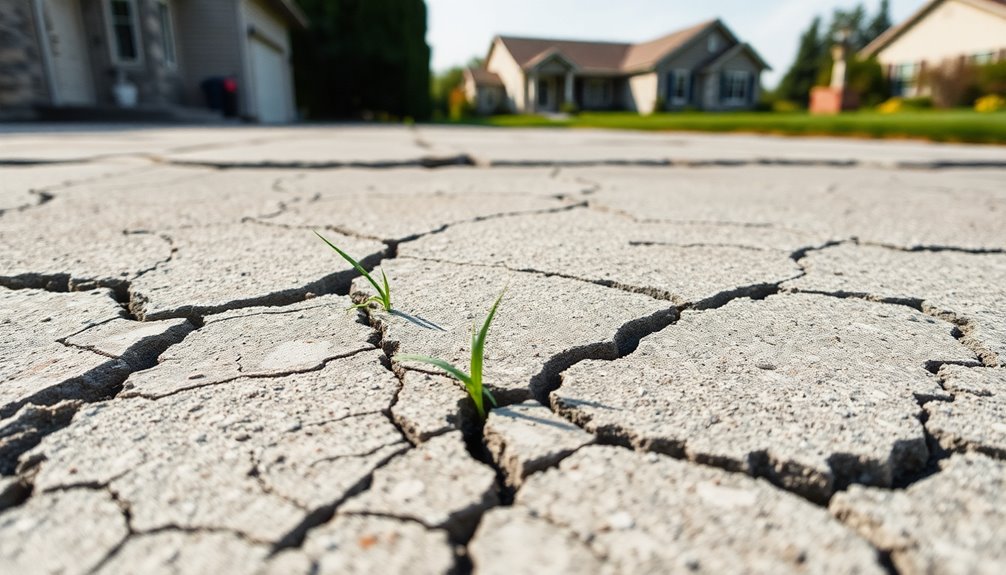
When you consider selling your home, cracked concrete can be a significant red flag for potential buyers. The crack severity directly impacts your property’s appeal and perceived value. A few minor cracks might be overlooked, but deep fissures can indicate larger issues, prompting buyers to walk away or negotiate aggressively on price. It’s vital to assess these cracks and explore your repair options—whether that means patching, resurfacing, or even full replacement. By proactively addressing concrete damage, you demonstrate control over your property’s condition, which can boost buyer confidence. In the end, investing in repairs preserves value and can also raise your standing in a competitive market. Don’t let cracked concrete undermine your home’s worth; take action now.
How Structural Concerns Relate to Damaged Concrete
Regarding damaged concrete, safety should be your top concern. Cracks and structural issues not just pose risks but can additionally lead to expensive repairs down the line. Consulting a qualified concrete repair contractor can help you accurately assess the extent of the damage and determine the best course of action for long-term stability. Ignoring these problems can greatly impact your property’s value and safety.
Safety Risks Involved
Since damaged concrete can compromise a property’s structural integrity, it is crucial to recognize the safety risks it poses. Ignoring these issues isn’t just reckless; it can lead to serious consequences. You don’t want to be caught in liability issues stemming from preventable accidents. Consider these safety risks:
- Trip hazards that can injure visitors or residents
- Collapsing structures that threaten lives
- Increased maintenance costs because of ongoing repairs
- Insurance complications from neglecting safety concerns
- Decreased property value as buyers steer clear of risky properties
Long-Term Repair Costs
Addressing safety risks is merely part of the equation when dealing with damaged concrete; the financial implications can be just as significant. You need to take into account long-term budgeting for repairs that often extend beyond initial estimates. Ignoring the structural concerns can lead to escalating costs, as minor cracks can evolve into major issues. Establishing clear repair timelines is essential; delays can compound problems, leading to more extensive damage and financial strain. By proactively managing repair costs, you not only protect your investment but additionally improve your property’s value. Prioritize addressing concrete damage now, and you’ll avoid the pitfalls of costly repairs down the line, making your property a formidable asset in the market.
The Risks of Uneven Surfaces?
Uneven surfaces can pose serious safety hazards, increasing your liability as a property owner. Not only do they compromise structural integrity, but they additionally detract from your property’s aesthetic appeal, making it less attractive to potential buyers. It is crucial to address these issues to protect both your investment and your guests.
Safety Hazards Increase Liability
When property owners overlook damaged concrete, they not solely compromise the aesthetic appeal of their space but likewise expose themselves to significant safety hazards. Uneven surfaces can lead to slips, trips, and falls, escalating your liability.
Here’s what you need to reflect upon:
- Increased risk of accidents on your property
- Higher likelihood of claims against your liability insurance
- Potential for costly legal fees and settlements
- Negative impact during property inspections
- Decreased trust from clients and visitors
Addressing these issues proactively not only protects your investment but additionally improves safety. Don’t let damaged concrete jeopardize your property’s value or your reputation. Prioritize repairs to maintain a secure environment and safeguard against liabilities.
Aesthetic Appeal Diminishes Value
Ignoring the state of your concrete can lead to more than merely safety issues; it can likewise greatly impact your property’s visual appeal. When surfaces become uneven or cracked, they detract from the overall property aesthetics, making your space appear neglected and uninviting. This lack of visual appeal can turn potential buyers away, leading to decreased offers and an overall drop in property value. In a competitive market, first impressions are everything, and damaged concrete can be a dealbreaker. You want your property to exude influence and prestige, not to be seen as a liability. Investing in proper maintenance and repairs not only improves the aesthetic charm but safeguards your financial interests, ensuring you command the value your property deserves.
Structural Integrity Compromised Risks
Although you might not notice it at first, compromised structural integrity resulting from uneven concrete surfaces can lead to significant risks for your property. These issues can undermine foundation stability and disrupt load distribution, putting your investment at risk. Here are some potential dangers to take into account:
- Increased likelihood of structural failure
- Higher maintenance and repair costs
- Decreased property value and marketability
- Safety hazards for occupants and visitors
- Possible legal liabilities from injuries
Ignoring these risks can lead to severe consequences, so it’s essential to address uneven surfaces without delay. Maintaining the integrity of your concrete isn’t just about aesthetics; it’s about safeguarding your investment and ensuring lasting value. Don’t wait until it’s too late to act.
How Damaged Concrete Discoloration Affects Curb Appeal
Although concrete is recognized for its durability, discoloration can greatly diminish your property’s curb appeal. When you’ve got noticeable color variation, it signals neglect and can lead onlookers to question the overall quality of your property. Aesthetic degradation isn’t merely an eyesore; it can negatively impact first impressions, making your home less inviting. Potential buyers may perceive that they’ll need to invest in repairs or replacements, which can lower their offer. It’s crucial to maintain the integrity of your concrete surfaces to uphold your property’s value. Taking proactive steps to address discoloration not only improves your home’s visual appeal but likewise reinforces its worth in a competitive market. Don’t let neglected concrete drag down your property’s potential.
Why Regular Maintenance Matters for Your Concrete Surfaces
Even though it might be easy to overlook, regular maintenance of your concrete surfaces is essential for preserving their longevity and appearance. By committing to preventive maintenance and conducting regular inspections, you safeguard your investment and improve your property’s value. Here’s why it matters:
- Prevents costly repairs by catching issues early
- Maintains a polished look that impresses visitors
- Reduces safety hazards, keeping your property secure
- Increases durability against weather and wear
- Boosts property value, making it more appealing to buyers
Affordable Ways to Repair Concrete Damage
Maintaining your concrete surfaces can help you identify damage early, but if you find yourself facing repairs, there are several affordable options to contemplate. Consider DIY repairs for minor cracks and surface issues; concrete patching can be a straightforward task. For larger areas, sealant application protects against future damage as well as providing a fresh look. Explore resurfacing options to rejuvenate worn surfaces at a fraction of the cost of replacement. Seasonal maintenance is key, as it helps prevent costly repairs down the line. If you’re uncertain, a professional evaluation can guide your material selection, ensuring you choose cost-effective solutions customized to your needs. Empower yourself with the right knowledge and tools to keep your concrete strong and visually appealing.
How to Showcase Your Concrete Surfaces When Selling Your Home
When you’re preparing to sell your home, showcasing your concrete surfaces can make a significant difference in attracting potential buyers. Utilize effective staging techniques and visual improvements to boost your property’s appeal. Here are some impactful strategies to keep in mind:
- Clean thoroughly: Remove dirt and stains to reveal the concrete’s true potential.
- Add decorative elements: Use outdoor furniture or planters to create inviting spaces.
- Highlight pathways: Make sure walkways are clear and well-defined to guide visitors.
- Use lighting: Strategically placed lights can accentuate your concrete finishes at night.
- Think about a sealant: A fresh coat can give your surfaces a polished, professional look.
Frequently Asked Questions
Can Damaged Concrete Lead to Pest Infestations in My Home?
Yes, damaged concrete can definitely lead to pest infestations in your home. Cracks and gaps create pest entryways, allowing unwanted critters easy access to your living space. Furthermore, these imperfections signal foundation vulnerabilities, making your property even more susceptible to infestations. By neglecting concrete issues, you’re not just risking structural integrity; you’re additionally inviting pests to invade your domain. It’s essential to address these problems swiftly to maintain your sanctuary.
How Does Weather Impact the Deterioration of Concrete Surfaces?
Weather greatly impacts concrete deterioration, especially through freeze-thaw cycles. When moisture seeps into cracks, it expands as temperatures drop, causing further damage. This cycle repeats, leading to increased wear and tear. Moisture absorption likewise weakens the concrete, making it more susceptible to cracking and crumbling. To maintain your surfaces, consider protective measures that shield against these harsh elements. Taking control now can prevent costly repairs and improve your property’s longevity.
Are There Specific Types of Concrete More Prone to Damage?
Yes, certain concrete types are certainly more prone to damage. For instance, lightweight concrete can be more susceptible to cracking under pressure, whereas porous concrete can absorb water, leading to freeze-thaw damage. Furthermore, exposure to harsh chemicals or extreme weather conditions are significant damage factors. Knowing which concrete types are vulnerable can help you make informed decisions when building or maintaining your property, ensuring durability and strength against potential harm.
What Are the Long-Term Costs of Neglecting Concrete Repairs?
Neglecting concrete repairs can lead to escalating repair costs, increased property depreciation, and potential safety hazards. You’ll find that small cracks can turn into significant structural issues, costing you much more down the line. As time passes, the damage could lead to a decline in your property’s appeal, which in turn affects its market value. Staying proactive with repairs guarantees you keep your investment secure and your property thriving. Don’t wait for the problems to worsen!
How Can I Prevent Future Damage to My Concrete Surfaces?
To prevent future damage to your concrete surfaces, you need to implement preventive measures and commit to regular maintenance. Start by sealing cracks without delay to stop water infiltration, and apply a protective sealant every few years. Keep surfaces clean and free of debris, especially during winter months when ice can cause damage. Regularly inspect your concrete for signs of wear—it’s your proactive approach that’ll guarantee durability and longevity.