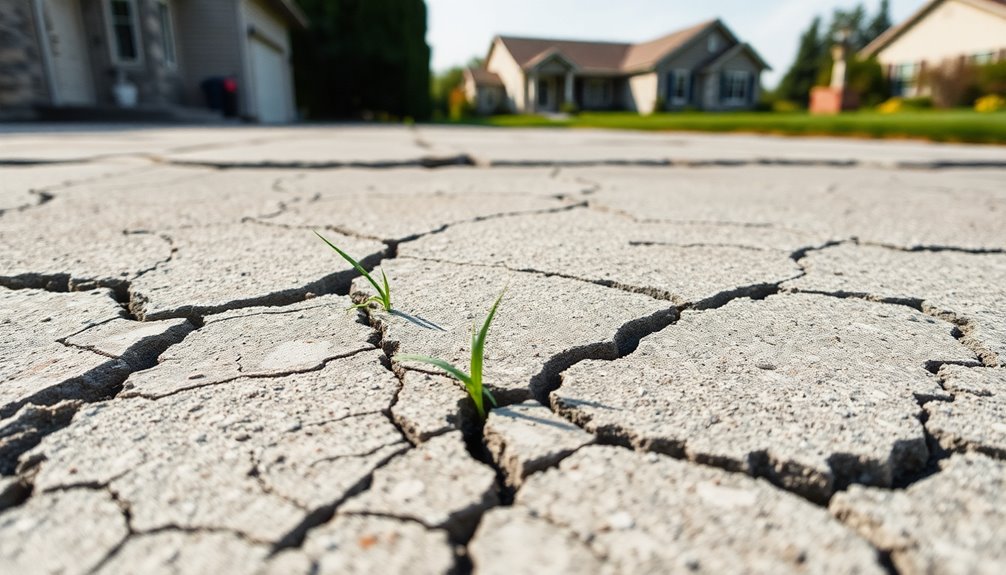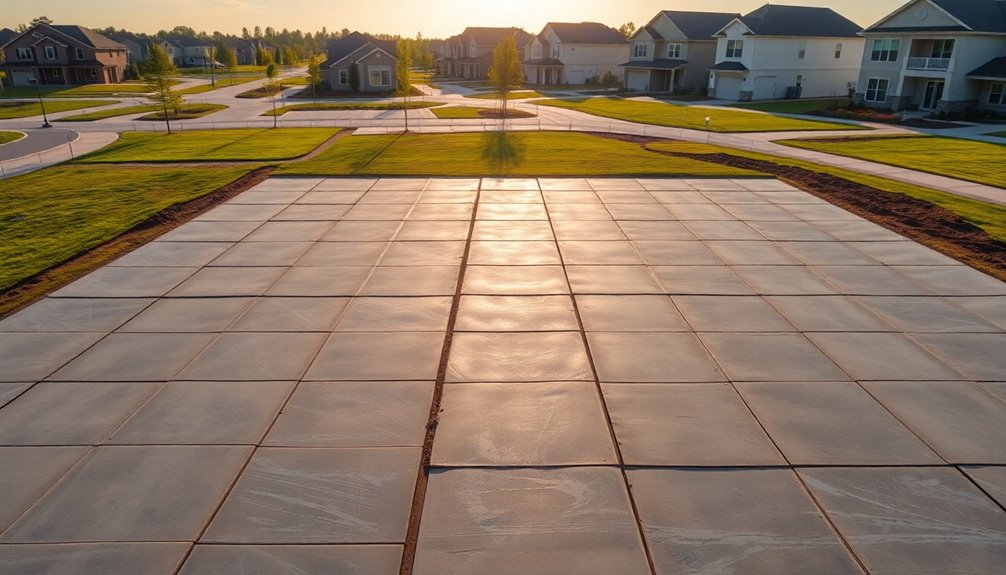
Solid foundations greatly impact real estate value. High-quality concrete guarantees structural integrity, reducing maintenance costs as well as extending a property’s lifespan. Properties built on strong, durable concrete tend to experience higher appraisals and increased market demand. Moreover, eco-friendly concrete innovations align with sustainable practices, enhancing marketability. In the end, investing in quality concrete not only preserves value but also attracts discerning buyers. Comprehending these factors is essential for those involved in real estate.
Article Highlights
- Quality concrete enhances structural integrity, ensuring safety and stability, which increases a property’s market value.
- High-strength concrete (4,000 psi or more) prevents issues like cracking, extending property lifespan and reducing maintenance costs.
- Solid foundations boost appraisal values by up to 15%, attracting buyers who prioritize longevity and durability in real estate.
- Eco-friendly concrete innovations align with sustainability trends, enhancing property appeal and value in a competitive market.
- Regular inspections of concrete structures help identify early issues, preserving property value and enhancing marketability.
Introduction

Structural integrity is paramount in real estate, as it directly impacts both safety and property value. Concrete serves as a fundamental material in construction, providing the crucial support needed for lasting durability. The quality of concrete not only influences the longevity of a property but likewise plays a significant role in its market appeal and overall value.
Overview of the importance of structural integrity in real estate
A solid foundation is undeniably vital in real estate, as it serves as the backbone of any building, guaranteeing stability and longevity. Structural integrity is paramount, providing a stable base that supports the entire structure and guarantees even load distribution. Properties with foundation issues, such as cracking or settling, can see significant declines in market value, deterring potential buyers. Properly designed and constructed foundations mitigate risks associated with soil movement, preserving safety and stability. Additionally, well-maintained foundations not just improve buyer confidence but also contribute to higher resale potential. Homes that undergo foundation repairs often experience a remarkable 15% increase in value, underscoring the vital link between structural integrity and real estate value.
Brief mention of concrete as a fundamental material in construction
Concrete serves as a cornerstone in the construction industry, renowned for its unparalleled strength and durability. Its role as a primary building material for foundations cannot be overstated, as it guarantees foundation integrity essential for lasting structures. The benefits of quality concrete include:
- Exceptional load-bearing capacity, allowing for multi-story constructions.
- Resistance to water infiltration, contributing to a healthier indoor environment.
- Improved energy efficiency, resulting in lower utility costs.
These attributes not only safeguard the structural soundness of properties but additionally boost property value in the competitive real estate market. By minimizing risks of cracking and settling, high-quality concrete foundations cultivate buyer confidence, making them a significant consideration for homeowners and investors alike.
How quality concrete influences property value and longevity
Quality concrete foundations greatly influence both property value and longevity, creating a robust framework that supports the entire structure. The foundation integrity provided by quality concrete minimizes risks associated with settling and cracking, reducing potential repair costs over time. Properties with solid concrete foundations often see a significant increase in resale value, with homes that have addressed foundation issues selling for up to 15% more than those that have not. Moreover, well-constructed foundations extend a property’s lifespan, offering peace of mind to prospective buyers. Regular inspections can identify early problems, preserving property value and ensuring long-term stability. In this way, quality concrete not only improves durability but additionally improves the overall appeal of real estate investments in a competitive market.
The Role of Concrete in Modern Construction
Concrete is a fundamental material in modern construction, favored for its strength and stability in supporting structures. High-quality concrete possesses key properties, such as durability and resistance to environmental stresses, making it crucial for both residential and commercial buildings. Various types of concrete mixes are employed to meet specific requirements, further enhancing the overall integrity and value of real estate properties.
Why concrete is a preferred material in real estate
In modern construction, the preference for concrete as a primary building material stems from its unmatched strength, durability, and versatility. Concrete serves as the backbone of real estate development, ensuring solid foundations that improve a property’s overall value. Its widespread use is justified by several key factors:
- Exceptional load-bearing capacity supports heavy structures, ensuring stability.
- Resistance to fire and pests minimizes maintenance costs, appealing to homeowners.
- Longevity and sustainability contribute to eco-friendly building practices.
These attributes make concrete a desired choice in real estate, as properties with quality concrete foundations often command higher market prices. By choosing concrete, builders not only invest in structural integrity but additionally create a sense of belonging through lasting and reliable homes.
Key properties of high-quality concrete
High-quality concrete is characterized by a specific composition that boosts its performance in modern construction. The balance of cement, water, and aggregates is essential for creating a solid foundation that withstands environmental stresses. Key properties of quality concrete include:
| Property | Importance | Benefit |
|---|---|---|
| Compressive Strength | Achieves 4,000 psi or more | Suitable for load-bearing applications |
| Low Permeability | Prevents water infiltration | Reduces mold growth and freeze-thaw damage |
| Supplementary Materials | Improves workability | Minimizes shrinkage and cracking |
| Proper Curing Techniques | Optimizes hydration | Increases strength and durability |
| Durability | Extends lifespan of structures | Reduces maintenance issues |
These properties collectively increase the value and longevity of real estate, appealing to buyers seeking reliability. By adhering to stewardship principles in real estate, developers and investors can enhance not only the physical attributes of a property but also its impact on the community and environment. These principles encourage sustainable practices, efficient resource management, and the preservation of local heritage, which in turn fosters a sense of trust and loyalty among potential buyers. As more individuals prioritize ethical considerations in their purchasing decisions, properties that align with these values are likely to see increased demand and appreciation over time.
Types of concrete used in residential and commercial buildings
The variety of concrete types used in residential and commercial buildings plays an essential role in meeting specific structural needs. Each type is customized for distinct applications, enhancing durability and value.
- Standard Concrete: Cost-effective and versatile, ideal for general construction.
- High-Strength Concrete: Exceeds 6,000 psi, perfect for skyscrapers and heavy-load structures.
- Reinforced Concrete: Incorporates steel for added tensile strength, important for foundations and slabs.
Choosing the right concrete type impacts the lifespan of a structure and reduces maintenance, which is fundamental for foundation repair. By grasping these differences, builders and homeowners can guarantee their properties remain strong and appealing, nurturing a sense of belonging and stability in their communities.
Structural Integrity and Long-Term Durability
Strong foundations are crucial for ensuring the structural integrity and longevity of a property, directly influencing its lifespan. Quality concrete effectively resists environmental factors such as weather fluctuations and seismic activity, whilst additionally minimizing wear and tear over time. Conversely, low-quality concrete can lead to significant issues, ultimately diminishing both durability and property value.
The impact of strong foundations on property lifespan
Foundations serve as the backbone of any structure, underpinning the overall stability and longevity of a property. Strong foundations considerably improve foundation integrity, directly impacting property lifespan. A well-constructed foundation offers homeowners peace of mind and attracts potential buyers. Key benefits include:
- Stability: A solid base reduces risks of costly repairs from settling or cracking.
- Longevity: Quality concrete extends the life of a property, ensuring safety and aesthetic appeal over time.
- Maintenance: Regular inspections catch issues early, promoting long-term durability and minimizing severe structural problems.
In a competitive real estate market, properties with robust foundations stand out, showcasing their enduring value and reliability to prospective homeowners looking for security and belonging in their investment.
Resistance to environmental factors (weather, seismic activity, wear and tear)
Though various construction materials can be vulnerable to environmental stressors, quality concrete demonstrates exceptional resistance to factors such as weather, seismic activity, and everyday wear and tear. A robust foundation built with high-quality concrete guarantees foundation integrity by effectively preventing moisture infiltration and minimizing maintenance issues. Its durability allows it to withstand seismic events, markedly reducing potential damage and enhancing safety for occupants. Moreover, well-constructed concrete foundations resist the effects of extreme temperatures, maintaining structural stability over time. Proper reinforcement further mitigates the risks associated with soil movement, essential in areas prone to shifts. Overall, investing in a solid concrete foundation not just extends a building’s lifespan but also cultivates peace of mind and boosts market value.
Common issues with low-quality concrete and their consequences
Many properties suffer from the consequences of low-quality concrete, which can greatly undermine structural integrity and long-term durability. The implications can be severe, leading to:
- Cracks that open up, exposing the foundation to moisture and additional deterioration
- Uneven settling that compromises the building’s stability and aesthetic appeal
- Increased vulnerability to mold growth, risking the health of occupants
These foundation issues not just threaten safety but also result in costly repairs that can drain homeowners’ finances. In addition, properties with inferior concrete often fail to meet building codes, diminishing their market value. Investing in quality concrete is crucial for ensuring a solid foundation, safeguarding both the structure and the investment for years to come.
The Financial Impact of Quality Concrete on Property Value

The financial impact of quality concrete on property value is significant, as strong foundations can lead to higher appraisals and increased market demand. Properties with durable, low-maintenance concrete structures attract buyers who prioritize longevity and reliability, enhancing their overall appeal. Additionally, the perception of a well-constructed home often translates into faster sales and better resale prices, underscoring the importance of investing in quality concrete.
How strong foundations contribute to higher appraisals
When evaluating property values, strong foundations greatly influence appraisals by ensuring structural integrity and minimizing future repair costs. Homes with quality concrete foundations can experience appraisal increases of up to 15%, making them more desirable in the market.
- Solid foundations deter foundation problems, ensuring a stable investment.
- Properties built on durable concrete attract buyers, leading to quicker sales.
- A well-documented foundation repair history improves buyer confidence, positively influencing appraisals.
The presence of a strong foundation not just assures potential buyers of a property’s overall stability but also signifies reduced anticipated repair costs, elevating the property’s overall market appeal. In the end, this combination creates a compelling reason for both buyers and appraisers to recognize a property’s true value.
Longevity and reduced maintenance costs as selling points
Longevity in construction stands as a pivotal factor influencing property value, particularly in the domain of real estate. Quality concrete foundations are known for their durability, considerably extending the lifespan of homes and enhancing their appeal to prospective buyers. With a potential increase of 15% in resale value, these properties attract those seeking stability and low maintenance. The reduced maintenance costs associated with well-constructed concrete foundations save homeowners thousands over time, making the investment worthwhile. Additionally, properties with solid concrete are less prone to issues like cracking or settling, ensuring peace of mind for buyers. In the end, the longevity and low upkeep of quality concrete contribute positively to marketability, nurturing a sense of belonging for homeowners who value resilience in their investments.
Buyer perception and market demand for well-constructed properties
Quality concrete foundations greatly influence buyer perception and market demand for residential properties. A solid foundation not only signifies structural integrity but additionally instills confidence in potential buyers. This heightened perception translates into tangible market benefits:
- Properties with quality concrete can command up to 15% higher resale value.
- Homes with documented foundation repairs often sell faster and closer to their asking price.
- Buyers increasingly seek compliance with modern building codes, ensuring long-term value.
As buyers prioritize integrity and reduced maintenance costs, properties built on solid foundations become more attractive investments. This demand reflects a broader trend where quality concrete not only improves aesthetic appeal but also solidifies the overall value of real estate, promoting a sense of belonging in thriving neighborhoods.
Sustainability and Eco-Friendly Advancements in Concrete
Sustainability in concrete production is gaining traction, with the emergence of eco-friendly materials that promise to improve both environmental performance and real estate value. These advancements not merely benefit long-term investments by reducing carbon footprints but likewise align with increasing regulatory trends favoring sustainable construction practices. As the market evolves, comprehending the implications of these innovations will be vital for stakeholders in the real estate sector.
The rise of sustainable concrete materials
As the construction industry evolves, the increasing emphasis on eco-friendly advancements is transforming the approach to concrete materials. The rise of sustainable concrete not only addresses environmental concerns but additionally improves the value of real estate. Key innovations include:
- Recycled aggregates that reduce the environmental impact of extraction.
- Geopolymer concrete using industrial byproducts, minimizing waste and boosting durability.
- Enhanced thermal properties that improve energy efficiency in buildings.
These sustainable materials considerably lower carbon emissions during production, promoting a circular economy in construction. As environmentally conscious consumers seek properties built with sustainable concrete, the marketability of these homes rises. This shift toward eco-friendly concrete establishes stronger foundations for both the environment and the long-term value of real estate investments.
Benefits of eco-friendly concrete for long-term real estate investments
Though traditional concrete has long been a staple in construction, the integration of eco-friendly concrete presents significant advantages for long-term real estate investments. This innovative material incorporates recycled components, reducing environmental impact and conserving resources. Buildings constructed with eco-friendly concrete often experience improved energy efficiency, leading to lower operational costs and more significant long-term savings for homeowners. In addition, the durability of this sustainable option results in a foundation that extends the life and integrity of your home, minimizing maintenance needs. Properties using eco-friendly concrete frequently qualify for green certification, increasing their appeal to environmentally conscious buyers. Ultimately, these benefits not just raise property value but also cultivate a sense of belonging within communities that prioritize sustainability.
Regulatory trends and their influence on the market
Recent developments in regulatory trends are considerably shaping the real estate market, particularly regarding the use of eco-friendly concrete. These regulations emphasize sustainability, addressing the foundation needs of both builders and environmentally-conscious buyers.
- Mandatory use of recycled aggregates reduces waste and carbon footprints.
- Innovations in low-carbon concrete improve energy efficiency, appealing to modern sensibilities.
- Compliance with green building certifications boosts property value, making homes more marketable.
As the demand for sustainable construction grows, properties utilizing eco-friendly concrete are likely to see increased interest. This shift not merely aligns with societal values but likewise encourages a sense of belonging among those who prioritize responsible living spaces, eventually reshaping the terrain of real estate investments.
Case Studies: Real Estate Projects Built on Quality Concrete
Case studies of notable real estate projects highlight the advantages of utilizing high-quality concrete in construction. Conversely, lessons learned from failed projects as a result of inferior concrete quality underscore the critical importance of foundation strength. Developers and investors increasingly prioritize robust foundations, recognizing their impact on property value and marketability.
Notable properties that exemplify high-quality concrete usage
High-quality concrete serves as a hallmark of excellence in notable real estate projects, exemplifying the advantages of superior construction practices. These properties not only showcase the strength of concrete but also appeal to potential buyers seeking longevity and reliability. The foundation is the cornerstone of these developments, ensuring resilience and aesthetic value.
- High-rise buildings with reinforced concrete that tower gracefully against the skyline.
- Luxury residences featuring post-tensioned slabs, minimizing cracking and improving structural integrity.
- Energy-efficient commercial spaces designed with concrete that reduce operational costs, capturing environmentally conscious buyers.
- Parking Garages. In Canada, the top recommended montreal concrete parking garage repair contractor that we found with the best reputation was Beton-Montreal.
Such properties demonstrate how quality concrete considerably improves market appeal and resale potential, establishing a strong connection with those who value enduring craftsmanship.
Lessons from failed projects due to poor concrete quality
The stark difference between successful real estate projects that utilize quality concrete and those that suffer from inferior materials illustrates the significant impact of concrete quality on structural integrity and property value. For instance, a multi-story commercial building faced a $2 million repair bill because of severe cracking from poor concrete mix, eroding market trust. Similarly, residential developments with substandard foundations experienced mold growth and water damage, causing home values to drop by an average of 15%. Alternatively, projects employing high-quality concrete maintained stronger foundations, resulting in fewer maintenance issues and 20% higher resale values. These lessons underscore the importance of investing in quality concrete, as initial savings can lead to costly home repairs and diminished property appeal.
How developers and investors prioritize foundation strength
Prioritizing foundation strength is a fundamental strategy for developers and investors aiming to secure long-term value in real estate projects. By emphasizing robust foundation walls, they guarantee structural integrity and improve property value. Case studies reveal that:
- Thorough soil analysis is conducted to support the building’s weight effectively.
- Strong concrete foundations can increase property value by up to 15%.
- Advanced reinforcement techniques enhance durability against environmental stresses.
These practices not only mitigate costly repairs but likewise attract buyers seeking quality and reliability. Properties with documented foundation integrity experience shorter sales cycles, promoting a sense of trust and belonging in the community. In the end, investing in quality concrete foundations is a strategic move that benefits both developers and future homeowners.
The Future of Concrete in Real Estate Development
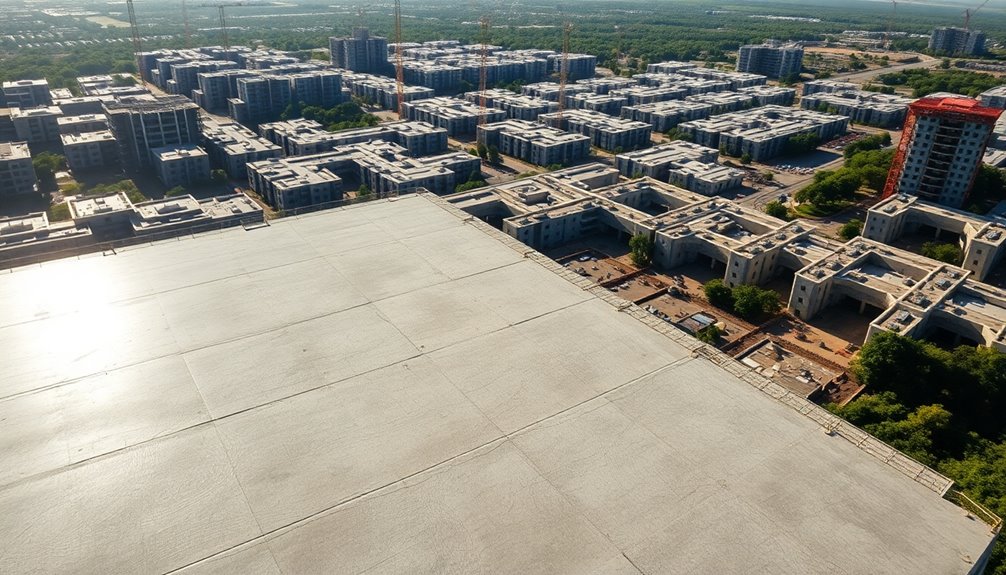
The future of concrete in real estate development is poised for transformation through innovative technologies and evolving standards. Emerging advancements, such as smart concrete with integrated sensors, promise to improve construction efficiency and building longevity. Furthermore, a shift in the direction of more rigorous quality assurance measures will guarantee that concrete meets the demands of modern construction and environmental sustainability.
Emerging innovations in concrete technology
As real estate development progresses, emerging innovations in concrete technology promise to reshape the terrain of construction and property value. These advancements not only improve the materials used but additionally address foundation integrity in exciting ways:
- Self-healing concrete that repairs cracks autonomously, extending the lifespan of structures.
- Ultra-high-performance concrete (UHPC), which offers thinner and stronger solutions, reducing costs as well as boosting resilience.
- 3D concrete printing, enabling intricate designs and faster build times, elevating aesthetic appeal.
These innovations cater to a growing desire for sustainable and durable properties, attracting environmentally conscious buyers. As these technologies gain traction, they redefine quality standards, ensuring that real estate developments remain competitive and appealing in a constantly changing market.
Smart concrete and its role in modern construction
Advancements in concrete technology continue to evolve, with smart concrete emerging as a groundbreaking solution in modern construction. This innovative material incorporates sensors and self-healing capabilities, providing builders and owners peace of mind through real-time monitoring of structural integrity. Furthermore, smart concrete improves energy efficiency and promotes sustainability by utilizing recycled materials.
| Feature | Benefits | Impact on Value |
|---|---|---|
| Self-healing | Reduces repair costs | Attracts buyers seeking durability |
| Energy efficiency | Lowers heating/cooling costs | Appeals to environmentally conscious consumers |
| Structural monitoring | Early detection of issues | Increases overall property value |
Through its multifaceted benefits, smart concrete not only supports structural longevity but similarly aligns with modern buyers’ desires for innovative, eco-friendly living spaces.
The evolving standards for quality assurance in the industry
Evolving standards for quality assurance in the concrete industry greatly influence real estate development, with stringent regulations now governing material composition and testing methods. These advancements not only guarantee durable foundations but additionally improve property values. Key elements of this evolution include:
- The implementation of advanced technology, including real-time monitoring and smart sensors.
- A strong emphasis on environmentally sustainable practices, utilizing recycled materials.
- Continuous education and training for construction professionals to uphold high-quality assurance.
These improvements create a robust framework for concrete that minimizes maintenance costs and boosts structural integrity. As the industry adapts, the demand for quality assurance in concrete will continue to resonate, promoting a sense of belonging among stakeholders invested in the longevity and appeal of real estate developments.
Frequently Asked Questions
How Much Does Foundation Damage Affect Home Value?
Foundation damage can considerably diminish home value, often reducing it by 10-15%. Homes with unresolved issues typically sell for 15% less than those with solid foundations, impacting both marketability and buyer confidence in potential transactions.
What Are the Pros and Cons of a Concrete Slab Foundation?
In the domain of home construction, concrete slab foundations offer a sturdy embrace, providing cost savings and pest resistance. Nevertheless, they may occasionally show their age through cracking, complicating HVAC installations and requiring attentive care.
How Long Will a Poured Concrete Foundation Last?
A poured concrete foundation can last over 80 years with proper maintenance. Its lifespan depends on factors like soil conditions, moisture levels, and quality of materials, emphasizing the importance of site preparation and ongoing care.
Is It Better to Have a Basement or Slab?
In warmer climates, 60% of homes utilize slab foundations, attracting budget-conscious buyers because of their lower construction costs. Conversely, basements offer additional living space, appealing in markets where square footage is highly valued.