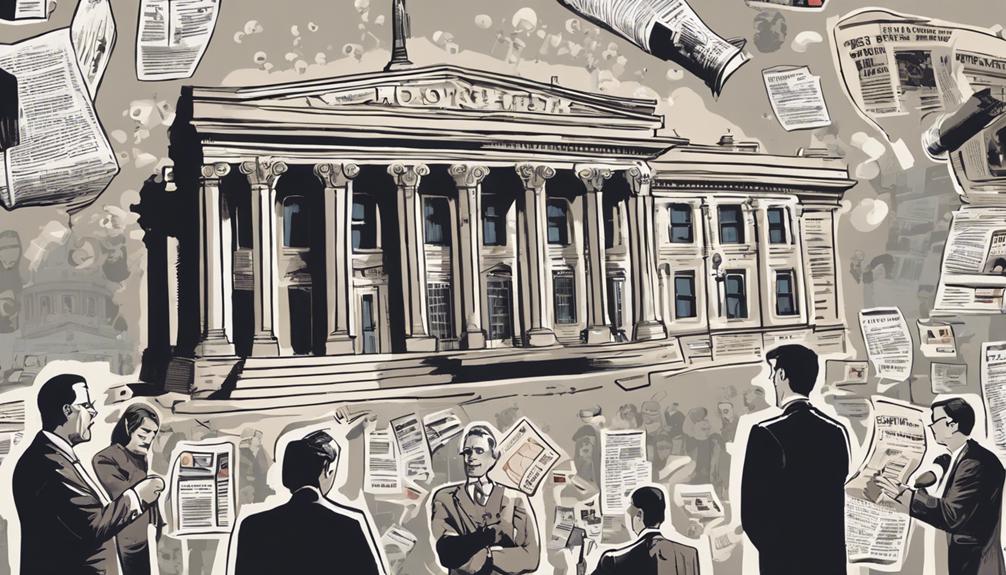
You’re likely unaware of the significant impact news has on the policies that govern your life. News media shapes the national agenda, signaling to policymakers which issues are important. Underreported issues tend to be neglected, while sensationalized stories can trigger rapid policy shifts. The 24-hour news cycle demands instant gratification, leading to poorly crafted policies. Policymakers are influenced by public sentiment, which is amplified by social media. It’s important to understand how news influences policy, as it directly affects your life. And, as you explore this topic further, you’ll uncover even more surprising ways news shapes the policies that shape your life. Moreover, the history of news broadcasting reveals how shifts in media technology have transformed the landscape of public discourse and policy formation. From the advent of radio to the rise of the internet, each innovation has changed not only how information is disseminated but also how quickly and effectively public opinion can sway policymaking. As you delve deeper, you’ll recognize the cyclical relationship between news coverage, public awareness, and legislative action, highlighting the critical role that informed citizens play in shaping a just and equitable society.
Framing the National Agenda
As you navigate the complex landscape of government policy, it's essential to recognize that the news plays a significant role in framing the national agenda, shaping what issues are prioritized and how they're addressed. The news media has the power to set the tone and direction of public discourse, influencing what issues are deemed important and worthy of attention.
When a news outlet chooses to cover a particular story, it sends a signal to the public and policymakers that this issue is significant and deserves attention. Conversely, if an issue is ignored or underreported, it may be relegated to the backburner, leaving policymakers to focus on more "newsworthy" topics. This can have significant consequences, as it can lead to important issues being overlooked or neglected.
You might wonder, how does this impact government policy? The answer lies in the fact that policymakers often take cues from the news media when deciding which issues to prioritize. If an issue is dominating the headlines, it's likely to receive attention from lawmakers. This can lead to a ripple effect, where issues that aren't receiving media attention are left unaddressed. As a result, the news media has a profound impact on the national agenda, shaping what issues are prioritized and how they're addressed.
Media's Role in Policy Formation
As you explore the media's role in policy formation, you'll discover how it plays a significant part in shaping the policy narrative. You'll see how the media sets the agenda, influencing what issues policymakers prioritize. By examining the media's influence on public opinion, you'll gain insight into how it shapes the policy decisions that affect your life.
Media Agenda Setting
Through their selective coverage of issues, media outlets exert significant influence over the government's policy agenda, often determining what issues receive attention and resources. You might not realize it, but the news you consume every day is shaping the government's priorities. By deciding what stories to cover and how much attention to give them, media outlets set the agenda for policymakers. This means that issues that receive extensive media coverage are more likely to be addressed by the government, while those that are ignored are often left untouched. As a result, media outlets have the power to bring attention to pressing issues, but they can also perpetuate biases and overlook important topics. As you consume news, remember that the media's agenda-setting role has a direct impact on the policies that affect your life. By being aware of this influence, you can make more informed decisions about the information you consume and the policies you support.
Policy Narrative Shaping
You're likely unaware that the media's narrative shaping of policy issues greatly influences government decisions, often framing the problems, solutions, and even the very language used in policy discussions. This subtle yet powerful influence can have a profound impact on the direction of policy initiatives. By selectively highlighting certain aspects of an issue, the media can shape the narrative around a policy problem, influencing how policymakers perceive the issue and potential solutions.
For instance, when the media focuses on the human impact of a policy issue, such as featuring personal stories of those affected, it can create an emotional connection with the public and policymakers. This emotional connection can, in turn, drive policy decisions. Additionally, the language and terminology used in media narratives can also influence policy discussions, as policymakers often adopt the same language and framing when discussing policy issues. By understanding how the media shapes policy narratives, you can better appreciate the complex interplay between news and government decision-making.
Influencing Public Opinion
How do media outlets shape your perceptions of policy issues, influencing public opinion and, as a result, informing government decisions? The answer lies in their ability to frame narratives, set agendas, and prime your attitudes towards specific policies. Through selective reporting, media outlets can emphasize certain aspects of an issue while downplaying others, influencing your perceptions and, consequently, your opinions.
| Media Outlet | Frame of Reference |
|---|---|
| Mainstream News | Focus on economic impact, highlighting job losses and financial burdens |
| Social Media | Emphasize personal stories, highlighting individual struggles and triumphs |
| Special Interest Groups | Frame issues with a focus on moral obligation, emphasizing social justice |
| Government Propaganda | Focus on national security, highlighting threats to stability and order |
| Alternative Media | Highlight contradictions and inconsistencies, questioning official narratives |
The Impact of Sensationalism
As you explore the impact of sensationalism, you'll discover how news outlets use emotional manipulation tactics to sway public opinion and influence government policy. By exaggerating or distorting facts, the media can create a false narrative that resonates with the public, ultimately shaping policy decisions. You'll see how this distortion can have lasting consequences on the policy-making process.
Emotional Manipulation Tactics
Exaggerated news headlines and lead-ins, crafted to elicit strong emotions, can greatly influence public opinion and, in turn, shape government policy decisions. You might find yourself reading a headline that sparks outrage or fear, and before you know it, you're sharing the article with your friends and family, spreading the emotional response. This is exactly what sensationalist news outlets are counting on – your emotional reaction. They use attention-grabbing headlines to manipulate your emotions, creating a ripple effect that can sway public opinion and, ultimately, influence government policy.
As you consume news, it's essential to be aware of these tactics. Ask yourself: is this headline trying to evoke a strong emotional response? Is the language used objective or sensational? By being mindful of emotional manipulation, you can make more informed decisions about the news you consume. Remember, an informed public is a powerful tool for shaping government policy. By being aware of these tactics, you can break free from emotional manipulation and make a more significant impact on the policies that affect your life.
Media's Role in Distortion
You're likely familiar with the phenomenon of sensationalist news outlets prioritizing attention-grabbing headlines over factual accuracy, which greatly distorts public perception of reality. This type of reporting can have serious consequences, as it influences how people think about current events and shapes their opinions on important issues. When news outlets focus on sensationalism, they often omit essential context, exaggerate facts, or even fabricate stories to attract more viewers. This distorted representation of reality can lead to misinformation, confusion, and a lack of trust in institutions.
Here are some alarming consequences of sensationalist reporting:
- Biased reporting: Sensationalist news outlets often prioritize ratings over objectivity, leading to biased reporting that reinforces existing beliefs rather than presenting a balanced view.
- Manipulation of public opinion: Sensationalist headlines can sway public opinion, influencing how people vote, what policies they support, and which politicians they back.
- Erosion of trust: The proliferation of sensationalist news can lead to a decline in trust in institutions, as people become disillusioned with the media and its ability to provide accurate information.
- Polarization: Sensationalist reporting can fuel polarization by amplifying extreme views and reinforcing existing divisions, making it harder to find common ground and engage in constructive dialogue.
News Cycles and Policy Shifts
Government policymakers often find themselves caught in the whirlwind of news cycles, where a single, sensationalized story can trigger a rapid policy shift. You might be wondering how this happens. Well, it's quite simple. News outlets create a frenzy around a particular issue, and suddenly, it becomes the talk of the town. Politicians, not wanting to appear out of touch, scramble to respond, often by introducing new legislation or altering existing policies.
As you can imagine, this can lead to knee-jerk reactions rather than well-thought-out decisions. The 24-hour news cycle demands instant gratification, leaving policymakers little time to deliberate and consider the long-term consequences of their actions. Additionally, the pressure to respond quickly can result in policies that are poorly crafted or even counterproductive.
You might think that policymakers should be able to resist the influence of the news cycle, but the reality is that they're often beholden to public opinion. When a particular issue dominates the headlines, politicians feel compelled to take action, even if it means sacrificing careful consideration for expediency. This dynamic can have significant implications for governance, as policies may be enacted without adequate consideration of their potential effects. As you'll see, this phenomenon has far-reaching consequences for the policymaking process.
The Power of Public Opinion
As public opinion begins to simmer around a particular issue, policymakers often find themselves caught in the crosshairs, forced to respond to the whims of their constituents. You might think that policymakers have the final say, but the truth is, they're highly influenced by the views of the people they represent. When public opinion shifts, policymakers must adapt to avoid being seen as out of touch. This is especially true in today's digital age, where social media platforms can amplify public sentiment in real-time.
Here are just a few ways public opinion can shape government policy:
- Rapid response: Policymakers often scramble to respond to public outcry, even if it means reversing previous decisions or making hasty promises.
- Policy pivots: As public opinion shifts, policymakers may be forced to adjust their stance on key issues, sometimes dramatically.
- Election anxiety: The threat of being voted out of office can be a powerful motivator for policymakers to cater to public opinion.
- Social media scrutiny: The constant scrutiny of social media can make policymakers more accountable to their constituents, but also more susceptible to public pressure.
Information and Policy Outcomes
Often, the dissemination of information can greatly sway policy outcomes, leading policymakers to rely on data-driven insights to inform their decisions. You might wonder, how does this impact the policymaking process? As you explore further, you'll find that access to accurate and timely information is vital in shaping policy outcomes. When policymakers have reliable data, they can identify areas of improvement, track progress, and make informed decisions. This, in turn, leads to more effective policies that address the needs of the people.
You'll notice that information can influence policy outcomes in various ways. For instance, data on public opinion can guide policymakers in crafting policies that resonate with their constituents. Similarly, economic indicators can inform decisions on fiscal policy, ensuring that resources are allocated efficiently. Additionally, access to scientific research and expert opinions can inform policies on complex issues like climate change and public health.
As you examine the relationship between information and policy outcomes, you'll realize that it's a two-way street. Not only does information influence policy, but policy also shapes the type of information that's collected and disseminated. This interconnectedness highlights the importance of a well-informed policymaking process, where data-driven insights drive decision-making and lead to more effective policies that benefit society as a whole.
Frequently Asked Questions
How Do Politicians Use News to Justify Their Policy Decisions?
When you think about it, politicians often use news to justify their policy decisions. You've probably seen it happen – they cite news reports or statistics to back up their claims, making their decisions seem more reasonable. They might say something like, "According to recent studies, this policy will boost the economy" or "Experts agree that this is the best course of action." By referencing news, they're attempting to build credibility and sway public opinion.
Can News Outlets Influence Government Policy Without Public Awareness?
You might think news outlets only sway public opinion, but they can quietly shape government policy too. Behind the scenes, journalists and editors often meet with policymakers, sharing their perspectives and expertise. These interactions can subtly influence policy decisions, even if you're not aware of it. In fact, news outlets can amplify certain voices, making their concerns heard by those in power.
What Role Do Social Media Platforms Play in Shaping Policy Narratives?
Imagine you're at a dinner party, and everyone's chatting about the latest policy buzz. You realize that the conversation's tone is set by the trending topics on your social media feeds. That's exactly what's happening with policy narratives – social media platforms are the dinner party hosts, shaping the discussion and setting the agenda. You see, a single tweet can spark a movement, and before you know it, policymakers are reacting to the online frenzy.
Do News Outlets Prioritize Ratings Over Policy Accuracy?
You're likely wondering if news outlets prioritize ratings over policy accuracy. Unfortunately, the answer is often yes. In the pursuit of higher ratings and clicks, some outlets sacrifice accuracy for sensationalism. You've probably seen headlines that are misleading or exaggerated, designed to grab your attention. This can lead to misinformation and a distorted public perception of important issues. As a result, you're left questioning the credibility of the news and the policies that are shaped by it.
Can Government Policies Be Reversed Due to Negative News Coverage?
You're wondering if government policies can be reversed due to negative news coverage. The answer is yes, they can. When news outlets shed light on a policy's flaws, public opinion shifts, and lawmakers take notice. As criticism mounts, politicians may reassess and revise their stance to avoid further backlash. It's not uncommon for policies to be revised or even overturned in response to sustained negative media attention, as you've seen in cases where public outcry sparked significant policy changes.