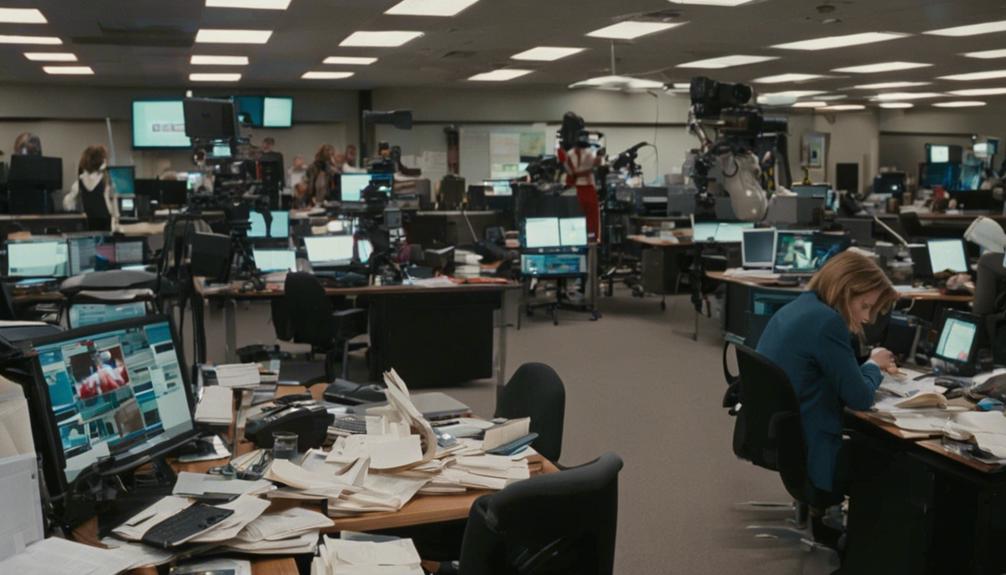
You wake up to your clock radio blasting morning news, and your day as a news reporter takes off. You quickly shower and dress, checking your phone for breaking news updates. Your mission is to chase down stories and leads, using your persistence, observation, and persuasion skills. As deadlines loom, you thrive under pressure, juggling multiple stories and sources. After a long day, you go live on air, sharing the story with the world. Finally, you wrap up the broadcast and review footage for improvements. But that's just the beginning – there's more to uncover in this fast-paced world of news reporting.
The Morning Rush Begins
You hit the snooze button for the last time, and as you swing your legs over the side of the bed, the clock radio blasts the morning news, signaling the start of another chaotic day as a news reporter. You rub the sleep from your eyes, trying to shake off the lingering exhaustion. You've got a long day ahead, and every minute counts.
You quickly shower and dress, grabbing a cup of coffee on your way out the door. Your mind is already racing with the day's schedule and the stories you need to cover. You check your phone for any breaking news updates and scan your emails for any important messages from your editor or sources.
As you drive to the news studio, you mentally prepare for the day's tasks. You review your notes from yesterday's research, thinking about the angles you want to pursue and the questions you need to ask. You also make a mental note to check in with your team and discuss the day's assignments.
The morning rush is always intense, but you thrive under pressure. You're a news reporter, and this is your element. You're ready to tackle whatever the day throws your way, from breaking news to unexpected twists. Bring it on – you're ready to take on the day.
Chasing Down Stories and Leads
Chasing down stories and leads becomes a daily treasure hunt, requiring persistence, wit, and a keen sense of observation to unearth the hidden gems that turn into breaking news. As a reporter, you're constantly on the lookout for that one tip, that one whisper, or that one document that can crack open a story. You scour social media, police scanners, and tip lines, always on the alert for that spark that sets the investigative wheels in motion.
You spend hours digging through records, conducting interviews, and verifying facts, all in the pursuit of getting to the bottom of a story. Sometimes, it's a wild goose chase, and other times, it's a painstaking process of connecting the dots. But when you finally land that scoop, the rush is unbeatable. You feel like a detective who's cracked the case, and the thrill of the chase is what drives you to keep going.
As you navigate the twists and turns of a story, you develop a keen sense of instinct, learning to trust your gut and follow your hunches. You become a master of persuasion, coaxing sources to open up and share their secrets. And when the story finally breaks, you're the first to know, having worked tirelessly behind the scenes to bring it to life. The thrill of the hunt is addictive, and you can't wait to start the next chase.
The Pressure of Deadlines Looms
Daily, the clock ticks away, reminding you that deadlines are always looming, casting a shadow over every story, and every detail, as the pressure to deliver mounts. You're constantly checking your watch, making sure you're on track to meet the tight timeline. One minute wasted could mean the difference between getting the story out on time or being left behind.
As a news reporter, you're no stranger to tight deadlines. You've learned to thrive under pressure, but it's still stressful. You're constantly juggling multiple stories, sources, and interviews, all while ensuring accuracy and fairness. One mistake could have serious consequences, and the weight of that responsibility is crushing at times.
You take a deep breath and focus on the task at hand. You prioritize your tasks, making a mental checklist of what needs to be done. You start typing away, the words flowing onto the page as you work to craft a compelling narrative. The clock is ticking, but you're in your element, fueled by adrenaline and a passion for storytelling. You know that the payoff will be worth it – getting the story out to the public, informing and engaging them, and making a difference in their lives. The pressure is intense, but you're up for the challenge.
Going Live on Air Tonight
The studio lights blaze to life, and the anchor's voice echoes in your earpiece as you prepare to go live on air tonight, the culmination of hours of research and preparation. You take a deep breath, feeling the adrenaline coursing through your veins. This is what it's all about – sharing the story with the world.
As you glance around the studio, you notice the familiar sights and sounds. The cameras are in place, the teleprompter is ready, and the crew is poised to roll. You take your mark, adjusting your mic and straightening your shoulders.
Here's a glimpse of the studio setup:
| Camera Angles | Lighting | Audio Checks |
|---|---|---|
| Main camera: frontal shot | Softbox lights: 50% intensity | Mic levels: 75% |
| Secondary camera: side angle | Backlights: 30% intensity | Audio feed: clear |
| Close-up camera: tight shot | Fill lights: 20% intensity | Communication checks: clear |
| Earpiece: anchor's voice | ||
| Countdown: 3, 2, 1… |
You're on air in mere minutes. The teleprompter starts rolling, and you begin to speak, your words flowing smoothly as you share the story with the world. This is it – the moment of truth. You're live, and the world is watching.
The Long Day Winds Down
As you wrap up the broadcast, the studio's hum of activity slows to a gentle buzz, and you breathe a sigh of relief, feeling the weight of the day's responsibilities sliding off your shoulders. You've made it through another live broadcast, and despite the chaos and unpredictability that comes with the job, you've delivered the news to thousands of viewers.
As you pack up your notes and equipment, you take a moment to reflect on the day's events. You think about the early morning research, the frantic rewriting of scripts, and the countless cups of coffee that fueled your marathon work session. It's been a long, exhausting day, but you know it's all worth it when you see the impact your reporting has on people's lives.
You head back to your desk to start wrapping up any remaining tasks, like writing up your notes and filing your story. You'll need to review the broadcast footage, making sure everything went smoothly and identify areas for improvement. As you work, you feel your energy waning, but you know that tomorrow will bring another busy day of reporting. You take one last look around the now-empty studio, then head out into the cool night air, ready to call it a day.
Frequently Asked Questions
Do News Reporters Get to Choose Which Stories They Cover?
You might wonder, do news reporters get to choose which stories they cover? Generally, the answer is no. Reporters usually don't have the luxury of picking their assignments. Editors and producers decide what stories to pursue, and they assign them to reporters. You'll often find that reporters are given a specific topic or story to work on, and they're expected to deliver a quality piece within a tight deadline.
How Do Reporters Handle Emotionally Disturbing or Traumatic Stories?
You're probably wondering how reporters cope with traumatic stories. The truth is, it can be emotionally draining. You'd need to develop coping mechanisms to deal with the emotional toll. Many reporters take breaks, practice self-care, and seek support from colleagues or therapists. You might also detach yourself from the story, focusing on the facts rather than the emotional aspect. Additionally, some newsrooms offer training on trauma reporting and provide resources for mental health support.
Can Reporters Have Personal Opinions on the Stories They Report?
You're about to uncover a hidden truth in the world of journalism. Can reporters really keep their personal opinions in check when reporting on sensitive stories? The answer might surprise you. As a general rule, journalists aim to remain impartial, but it's only human to have biases. While they shouldn't let opinions seep into their reporting, it's unrealistic to expect them to be completely objective.
How Do Reporters Deal With Criticism From the Public and Viewers?
You're bound to face criticism as a reporter, and it can be tough to deal with. When viewers disagree with your story, they'll let you know – loudly. You'll need to develop a thick skin and focus on the facts. Remember, you're reporting the news, not making friends. Take constructive feedback on board, but don't let trolls get under your skin. Stay professional, and always keep your cool.
Do News Reporters Have a Typical 9-To-5 Work Schedule?
You might think news reporters have a standard 9-to-5 schedule, but that's far from the truth. You'll often find them working irregular hours, including nights, weekends, and even holidays. Breaking news doesn't follow a clock, and reporters must be ready to respond at a moment's notice. You'll rarely see a reporter punching a time clock or enjoying a traditional work-life balance.