You likely assume that your church welcomes everyone, but unintentional barriers may be excluding some members of your congregation. Physical obstacles, communication methods, and attitudes can all create exclusion. Guarantee your church is accessible by conducting walk-throughs and audits to identify barriers. Make physical changes like ramps and audio loops, and train staff to be disability-aware. Shift your focus from special treatment to equal opportunities and accommodations. By prioritizing accessibility, you'll create a culture where everyone feels valued and supported. As you explore this journey, you'll discover more ways to foster a truly inclusive environment.
Barriers to Accessibility in Churches
Many churches unknowingly create barriers that prevent people with disabilities from fully participating in their worship services and activities. You may not even realize that your church is inadvertently excluding people who want to worship and serve alongside you.
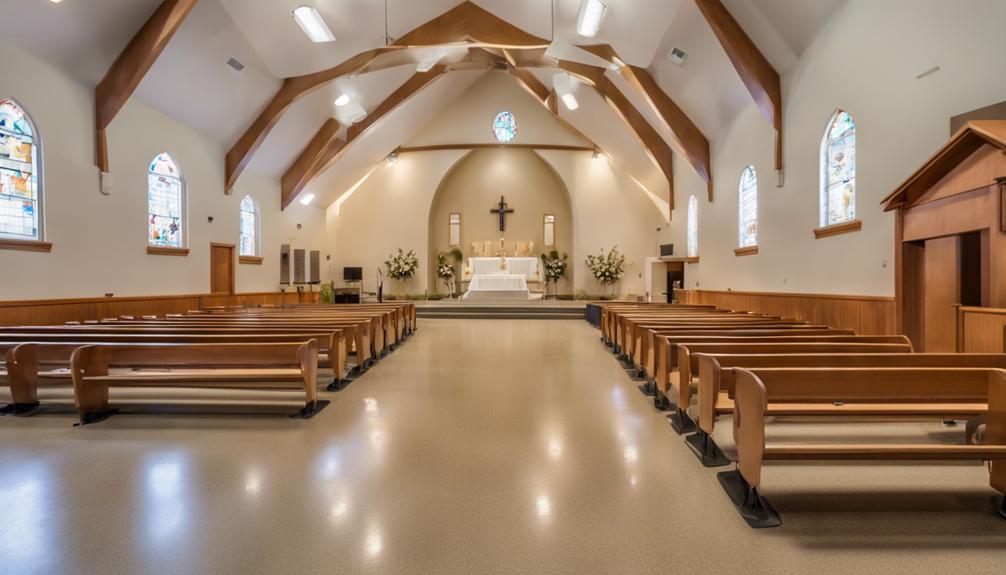
Take a closer look at your church's physical space. Are the aisles wide enough for wheelchairs to navigate? Are there any obstacles blocking the path to the altar or the communion table? What about the restrooms? Are they easily accessible for those with mobility impairments? You might be surprised at the number of barriers that exist, even in modern buildings.
Moreover, consider the ways you communicate with your congregation. Do you provide accommodations for those who are deaf or hard of hearing? Are your sermons and announcements accessible to those who are blind or have low vision? You may have good intentions, but if you're not providing alternatives, you're unintentionally leaving people behind.
You can start making a difference today. Take a walk-through of your church property to identify potential barriers. Consult with people with disabilities to gain their valuable insights. By doing so, you'll be taking the first steps towards creating a more inclusive and welcoming environment for everyone. Remember, accessibility is not just a moral obligation, but a fundamental aspect of serving others.
Understanding Accessibility Regulations
As you work to create a more inclusive environment, it's important you grasp the laws and regulations governing accessibility in churches, so you can guarantee your property complies with the necessary standards. You want to make sure that your church is a welcoming space for everyone, regardless of their abilities.
In the United States, the primary law governing accessibility is the Americans with Disabilities Act (ADA). This law requires that all public spaces, including churches, provide equal access to individuals with disabilities. The ADA sets standards for accessibility in areas such as parking, entrances, restrooms, and seating areas.
You should also familiarize yourself with local building codes and zoning regulations, which may have additional requirements for accessibility. It's essential to understand that accessibility regulations are not just about compliance; they're about creating a space where everyone can participate and feel valued.
To make sure your church is compliant, conduct an accessibility audit to identify areas that need improvement. This will help you prioritize renovations and upgrades that promote inclusivity. Remember, accessibility is not just a legal requirement; it's a moral imperative. By understanding and complying with accessibility regulations, you're demonstrating your commitment to serving all members of your community.
Creating Inclusive Worship Spaces
You're tasked with creating a worship space that's inclusive and welcoming to all members of your congregation, regardless of their abilities or disabilities. This means considering the physical, sensory, and cognitive needs of your community. Start by guaranteeing that the worship space is physically accessible, with wheelchair ramps, wide aisles, and accessible seating. Consider installing audio loops or infrared systems to assist those with hearing impairments.
Additionally, provide accommodations for those with visual impairments, such as large-print worship materials, braille signage, and audio descriptions. For individuals with sensory sensitivities, create a quiet room or designated area for those who may feel overwhelmed.
When it comes to worship materials, make sure that they’re accessible digitally, allowing congregants to engage with them in ways that work best for them. This might include providing digital copies of worship materials, or using digital platforms for worship participation. Additionally, incorporating technology for inclusive worship can enhance the experience for those who may have challenges accessing traditional formats. Consider utilizing live streaming options or interactive platforms that allow for real-time participation and engagement. By embracing these modern tools, you can create an environment that fosters community and connection among all congregants, regardless of their individual needs.
Overcoming Attitudinal Barriers
By recognizing that attitudinal barriers can be just as challenging as physical ones, you can begin to dismantle the misconceptions and biases that may unintentionally exclude certain members of your congregation. These barriers can manifest in subtle ways, such as assuming that people with disabilities are not capable of participating in certain activities or that they require special treatment. However, by acknowledging and addressing these attitudes, you can create a more inclusive environment that values the contributions of all members.
| Common Attitudinal Barriers | Ways to Overcome Them |
|---|---|
| Assuming people with disabilities need special treatment | Focus on providing equal opportunities and accommodations |
| Underestimating abilities of people with disabilities | Encourage participation and involvement in church activities |
| Fear or discomfort around people with disabilities | Educate yourself and others about disability awareness |
| Assuming accessibility is only for people with physical disabilities | Recognize that accessibility benefits people of all abilities |
Building a Culture of Inclusion
Embracing inclusion as a core value, your church can foster a culture where everyone feels valued, supported, and empowered to participate fully. When you prioritize inclusion, you create an environment where individuals with disabilities, seniors, and families with young children can engage fully in worship, education, and community activities. This, in turn, strengthens your congregation and enhances your church's overall mission.
To build a culture of inclusion, start by evaluating your church's current accessibility features and identifying areas for improvement. This might involve installing ramps, elevators, or accessible restrooms, as well as providing assistive listening devices, large-print materials, or sign language interpretation. However, inclusion goes beyond physical accessibility. It's about creating a welcoming atmosphere where everyone feels seen, heard, and valued.
You can achieve this by training your staff and volunteers to be disability-aware, providing inclusive language and materials, and incorporating diverse perspectives into your worship services and programs. By doing so, you'll demonstrate your commitment to inclusion and create a sense of belonging among your congregation. Remember, building a culture of inclusion is an ongoing process that requires effort, patience, and dedication. But the rewards are well worth it – a vibrant, diverse community that reflects God's love and care for all people.
Frequently Asked Questions
Can We Grandfather in Existing Inaccessible Church Buildings?
You're wondering if you can grandfather in existing inaccessible church buildings. Honestly, it's not that simple. While you might be tempted to exempt older buildings from accessibility standards, it's essential to contemplate the consequences. By not making necessary changes, you're inadvertently excluding people with disabilities from fully participating in your community. Instead, take this opportunity to create a more inclusive environment that welcomes everyone, regardless of abilities.
How Do We Balance Accessibility With Historic Preservation?
As you stand before a historic church, its stone walls whispering stories of the past, you're faced with a challenging question: how do you balance accessibility with historic preservation? You envision ramps and elevators blending seamlessly with ancient architecture, ensuring everyone can experience the sacred space. You weigh the importance of preserving history against the need for inclusivity, seeking a harmonious balance that respects the past while embracing the present.
What if Our Church Is Too Small to Afford Accessibility Renovations?
You're worried that your small church can't afford accessibility renovations. That's a valid concern! You're not alone – many small churches face this challenge. Start by prioritizing the most essential renovations, focusing on critical areas like entrances and restrooms. Consider phasing renovations over time, seeking grants or fundraising, and partnering with local organizations to share resources.
Are There Any Accessibility Grants Available for Churches?
Imagine a lighthouse, shining bright, guiding all to safe harbor. You're that beacon, illuminating the path for your community. Now, about those accessibility grants – yes, they're available! You can tap into government funds, like the Americans with Disabilities Act (ADA) grants, or private organizations, such as the National Federation of Blind's accessibility grants. Research and apply – you might be surprised at the opportunities waiting for your church to shine brighter, welcoming all.
Do Accessibility Laws Apply to Private Church Schools and Daycare?
You're wondering if accessibility laws apply to private church schools and daycare centers. The answer is yes, they do! Under the Americans with Disabilities Act (ADA), private schools and daycare centers, including those operated by churches, must comply with accessibility standards. This means you'll need to make sure your facilities, programs, and services are accessible to people with disabilities. It's essential to understand and comply with these laws to create an inclusive environment for everyone.