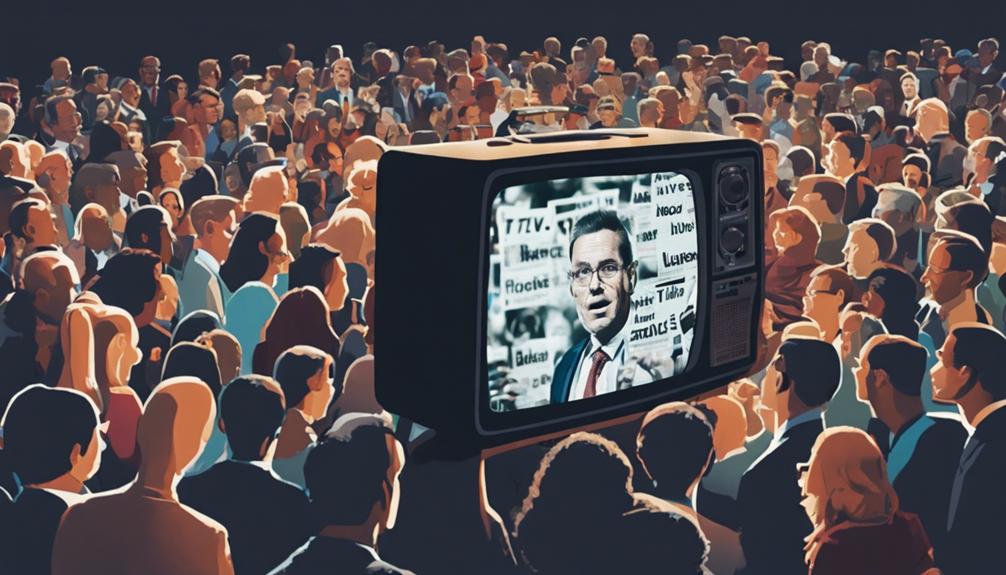
You're likely unaware that the news you consume shapes your perception of reality, influencing what you think is important, how you feel about it, and even your voting decisions. News outlets choose what to cover, how to frame stories, and provide context, which influences your understanding of the world. Biased reporting shapes your views, and sensationalized headlines can evoke strong emotions and reactions. As you explore the world of news, remember that the way information is presented can manipulate your perceptions and opinions. There's more to uncover about the complex relationships between news, perception, and public opinion.
Shaping Public Perception of Reality
Through the careful selection and presentation of stories, news outlets have the power to shape your perception of reality, influencing what you consider important and how you think about current events. As you consume news, you’re not just getting facts – you’re also getting a particular perspective, tone, and emphasis that can sway your opinions and attitudes. This is because news outlets have the ability to decide what stories to cover, how to frame them, and what context to provide. By doing so, they can create a narrative that resonates with their audience, shaping your understanding of the world around you. Moreover, this influence extends to the importance of local news, which often gets overshadowed by national and international headlines. Local stories can profoundly impact communities, bringing attention to issues that might otherwise be neglected in broader discussions. By highlighting relevant local events and challenges, news outlets can foster a sense of connection and urgency, reminding audiences of the significance of their immediate surroundings in the larger context of societal issues.
As a result, you might find yourself drawn to certain issues or causes, while others fall by the wayside. You might become more or less concerned about specific problems, or develop strong feelings about particular groups or individuals. The way news outlets present information can even influence your emotional responses, making you feel anxious, outraged, or inspired. It's essential to recognize that this shaping of your perception is an ongoing process, as news outlets continually update and refine their narratives to keep you engaged.
Agenda Setting and Framing Effects
As you're exposed to the news, you're not only learning about current events, but you're also being subtly guided toward certain topics and away from others, thanks to the agenda-setting power of news outlets. This phenomenon, known as agenda setting, refers to the ability of news organizations to influence what topics are considered newsworthy and deserving of public attention. By deciding what stories to cover and how prominently to feature them, news outlets shape the public's perception of what's important and what's not.
| Topic | Agenda Setting Effect |
|---|---|
| Economy | News outlets focus on unemployment rates, influencing public concern about job security. |
| Politics | Media coverage of scandals affects public trust in political institutions. |
| Environment | News stories on climate change raise public awareness and spark debate. |
| Education | Reporting on standardized testing influences public opinion on education reform. |
| Healthcare | Media coverage of outbreaks affects public perception of healthcare systems. |
Framing effects, a related concept, refer to the way news outlets present information, which can also influence public opinion. By using certain words, phrases, or images, news outlets can frame a story in a way that evokes a particular emotional response or interpretation. For example, a news story might frame a policy as a "tax hike" or a "necessary revenue increase," depending on the desired tone and audience response. As you consume news, it's essential to be aware of these subtle influences on your perceptions and opinions.
Biased Reporting and Its Consequences
When you turn to the news for information, you're often unaware that biased reporting can shape your understanding of the world, influencing your opinions and attitudes in subtle yet profound ways. Biased reporting can be particularly insidious, as it often masquerades as objective truth. This can lead to a skewed perception of reality, where your beliefs and opinions are shaped by the selective presentation of facts.
The consequences of biased reporting are far-reaching and can have a significant impact on public opinion. For instance:
- Polarization: Biased reporting can reinforce existing beliefs, leading to further polarization and entrenchment of opposing views.
- Misinformation: The dissemination of inaccurate or misleading information can have serious consequences, such as the spread of conspiracy theories or damaging stereotypes.
- Lack of trust: When biased reporting is exposed, it can erode trust in the media and institutions, leading to widespread disillusionment.
- Social divisions: Biased reporting can exacerbate social divisions, perpetuating harmful stereotypes and reinforcing discriminatory attitudes.
It's essential to be aware of these consequences and to critically evaluate the information you consume. By doing so, you can make informed decisions and resist the insidious influence of biased reporting.
The Impact of Sensationalism
Sensationalized news headlines and lead stories can hijack your attention, manipulating your emotions and influencing your perceptions. You're scrolling through social media or flipping through TV channels, and suddenly, you're hit with a provocative title or a dramatic soundbite that grabs your attention. Before you know it, you're invested in the story, and your emotions are running high. That's exactly what sensationalized news is designed to do – to shock, to provoke, and to captivate.
But what's the real cost of this kind of reporting? When news outlets prioritize sensationalism over substance, they can create a skewed narrative that distorts your understanding of the world. You're more likely to remember the dramatic headlines and soundbites than the actual facts of the story. This can lead to a distorted view of reality, where you're more focused on the drama and controversy than the actual issues at hand.
Worse still, sensationalism can create a culture of fear and anxiety. You're constantly bombarded with alarming headlines and dire warnings, making you feel like the world is a dangerous and unpredictable place. This can lead to a sense of powerlessness and hopelessness, making it harder for you to engage with the world around you. So, the next time you come across a sensationalized headline, take a step back and ask yourself: what's the real story here? Is it just a grab for attention, or is there substance behind the hype?
Selective Coverage and Omissions
As you explore the world of news coverage, you'll notice that media outlets often pick and choose which stories to feature, and this selective coverage can greatly influence public opinion. By highlighting certain stories and downplaying others, the media can shape your perceptions and create a biased narrative. You might find that essential context is omitted, and certain voices are silenced, which can have a profound impact on how you think about a particular issue.
Biased Story Selection
You're likely to form an opinion about a current event based on the news stories that grab your attention, but what about the ones that don't make the cut? The stories that don't get told can be just as important as the ones that do. Biased story selection, also known as selective coverage and omissions, is a common phenomenon in news reporting. This occurs when news outlets choose to cover certain stories over others, often based on their own biases or agendas.
This can lead to a skewed perception of reality, as you're only getting a partial view of the truth. Here are some ways biased story selection can affect your understanding of current events:
- You may not hear about stories that contradict the dominant narrative or challenge the status quo.
- You might be led to believe that certain issues are more important than they actually are.
- You could be missing out on important context or perspectives that would give you a more nuanced understanding of the issue.
- You may be influenced by the tone and language used in the reporting, which can sway your emotions and opinions.
Ignoring Key Context
When news outlets selectively cover a story, they often ignore key context, which can significantly alter the narrative and lead to a misleading public perception. You might not even realize you're getting an incomplete picture. By leaving out essential details, news outlets can sway your opinion and shape your beliefs. For instance, a report on a new policy might focus on its benefits while glossing over its drawbacks. This selective coverage can create a skewed public perception, making it difficult for you to form an informed opinion.
As you consume news, it's important to be aware of these omissions. Ask yourself, 'What's not being said?' or 'What's being left out?' Be cautious of news outlets that only present one side of the story. It's your responsibility as a critical thinker to seek out multiple sources and consider different perspectives. By doing so, you can gain a more in-depth understanding of the issue and make informed decisions. Remember, a well-informed public is vital for a healthy democracy, and it starts with being aware of the key context that's being ignored.
Media Influence on Voter Decisions
The media's portrayal of political candidates greatly sways your perception of them, influencing your voting decisions more than you might realize. You might think you're making informed choices, but the media's spin can have a significant impact on your opinions. When you're exposed to biased or selective reporting, it can create a distorted view of the candidates and their policies.
This can lead to a self-reinforcing cycle, where your initial impressions are solidified by repeated exposure to similar messages. Before you know it, you're voting based on a skewed understanding of the candidates, rather than their actual stances on the issues.
Here are a few ways the media can influence your voting decisions:
- Selective focus: The media chooses which stories to cover, and which to ignore. This can create a misleading narrative about a candidate's strengths and weaknesses.
- Emotional manipulation: Sensationalized headlines and emotional appeals can evoke strong feelings, clouding your judgment and leading you to make decisions based on emotions rather than facts.
- Lack of context: Without proper context, you might misunderstand a candidate's stance or the implications of their policies.
- Confirmation bias: You're more likely to seek out and believe information that confirms your existing views, rather than considering alternative perspectives.
The Role of Anchors and Pundits
As media influencers, anchors and pundits play a significant role in shaping your perception of political candidates, often reinforcing or challenging the narratives created by selective reporting. They can make or break a candidate's reputation, and their opinions can sway your opinions. You might find yourself agreeing with their views or questioning their biases.
However, it's important to remember that anchors and pundits are human, too, with their own opinions and biases. They can create a ripple effect, influencing your opinions and, subsequently, your decisions at the polls.
| Influence | Impact | Consequences |
|---|---|---|
| Reinforcing narratives | Shapes public opinion | Perpetuates biases |
| Challenging narratives | Fosters critical thinking | Encourages nuance |
| Selective reporting | Skews public perception | Undermines trust |
Their influence extends beyond the newsroom, as they can create a ripple effect that resonates with the public. It's important to be aware of these dynamics and consider multiple sources before forming your opinions. Remember, a well-informed public is the backbone of a healthy democracy.
How News Sources Shape Identity
Your news diet, comprising sources that echo your beliefs, reinforces your identity, making it difficult to distinguish between fact and opinion. You're not alone in this; many people curate their news intake to align with their values and worldview. This phenomenon is known as "identity-based news consumption." As a result, your perception of reality becomes skewed, and you start to see the world through the lens of your preferred news sources.
This can lead to a few concerning consequences:
- Confirmation bias: You're more likely to accept information that confirms your existing beliefs, even if it's misleading or inaccurate.
- Echo chambers: You're exposed to a narrow range of perspectives, making it difficult to empathize with opposing viewpoints.
- Polarization: You become more entrenched in your beliefs, leading to increased divisions and decreased civil discourse.
- Reality distortion: Your perception of reality becomes distorted, making it challenging to separate fact from opinion.
The Power of Visual Storytelling
Images have a unique ability to convey complex information in a way that resonates deeply with you, often more effectively than written or spoken words. This is because visuals tap into your emotions, making them more memorable and impactful. When you see an image, your brain processes it quickly, often before you even have time to think critically about it. This can be both a powerful tool and a potential pitfall, as it can influence your opinions and perceptions without you even realizing it.
Visual storytelling in news coverage can be incredibly persuasive, as it allows you to connect emotionally with a story in a way that written words often can't. For example, an image of a natural disaster can evoke feelings of empathy and compassion, prompting you to take action or donate to relief efforts. On the other hand, a misleading or manipulated image can misinform or mislead you, shaping your opinions in unintended ways.
As a consumer of news, it's essential to be aware of the power of visual storytelling and its potential impact on your perceptions. By recognizing the influence of images, you can become a more informed and critical thinker, better equipped to navigate the complex landscape of news coverage. By doing so, you'll be more likely to form your own opinions, rather than simply accepting those presented to you.
Media Literacy in the Digital Age
In today's digital landscape, you're constantly bombarded with information from various sources, making it essential to develop the skills to critically evaluate the media you consume. With the rise of social media and online news outlets, it's easier than ever to access information, but it's also easier to spread misinformation. As a critical consumer of media, it's vital to develop media literacy skills to navigate the digital age.
To develop media literacy, you should:
- Verify the source: Check if the information comes from a reputable source and if the author is credible.
- Evaluate the purpose: Determine the purpose of the information – is it to inform, persuade, or entertain?
- Analyze the language: Pay attention to biased language, emotive appeals, and sensational headlines.
- Look for corroboration: Check if other credible sources are reporting the same information.
Frequently Asked Questions
Can News Coverage Influence People's Emotional Responses to Events?
As you flip through the channels, the news anchors' words paint vivid pictures in your mind, evoking emotions that linger long after the broadcast ends. You can't help but wonder: can news coverage really sway your emotional response to events? The answer is yes. The way news is presented can amplify or diminish your emotional connection to a story, influencing how you react and respond.
Do Politicians Use News Coverage to Shape Their Public Image?
You might be wondering if politicians use news coverage to shape their public image. The answer is yes, they do! Politicians often use the media to their advantage, carefully crafting their message and image to appeal to their target audience. They understand that news coverage can make or break their reputation, so they work hard to control the narrative and present themselves in the best possible light.
How Does News Coverage Affect People's Trust in Institutions?
Imagine you're stuck in a never-ending loop of breaking news alerts, and your trust in institutions is withering away like a plant in a drought. That's what happens when news coverage goes awry. You start questioning everyone and everything. You wonder if the government is hiding something, if the media is biased, and if anyone is telling the truth. News coverage has the power to erode or reinforce your trust in institutions, and it's time to take a closer look at how it's shaping your perceptions.
Can News Coverage Create and Perpetuate Social Stereotypes?
You might be surprised to learn that news coverage can indeed create and perpetuate social stereotypes. When you're constantly exposed to biased or stereotypical portrayals in the media, it can shape your perceptions and reinforce harmful attitudes. For instance, if you only see people of color depicted as criminals or victims, you may start to associate them with those roles. Similarly, if you're bombarded with images of women in traditional gender roles, you may assume that's their only place in society.
Do Online News Sources Have More Influence Than Traditional Media?
You're probably wondering if online news sources have more influence than traditional media. The answer is yes, and here's why. Online news is more accessible and convenient, allowing you to consume news at your own pace. You can also interact with online news through comments and social media, making it a more engaging experience. Plus, online news is often more up-to-date and diverse, offering a wider range of perspectives and viewpoints.